
INTERVIEW: Wolves at the Gate release new album ‘Wasteland’
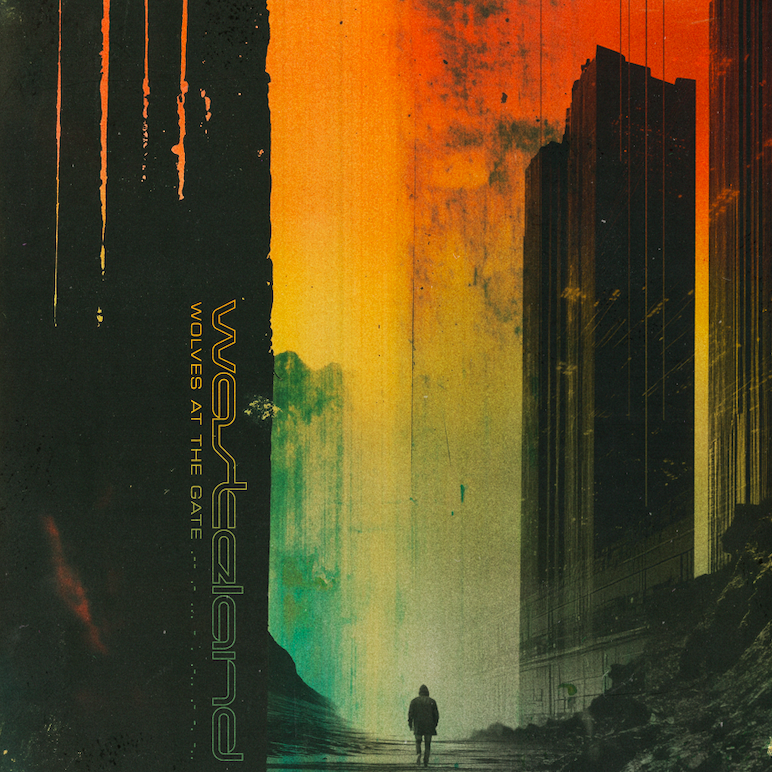
Photo: Wolves at the Gate’s new album is called Wasteland. Photo courtesy of Aaron Marsh / Provided by Atom Splitter PR with permission.
Wolves at the Gate, the metalcore band with members on both coasts of the United States, are back with a new album called Wasteland, now available from Solid State Records. For vocalist and guitarist Steve Cobucci, the recording is the culmination of a years-long process, a statement of his and the band’s creativity since their last album, 2022’s Eulogies. Joining him in Wolves at the Gate are Ben Summers on bass, Nick Detty on lead vocals and keys, Abishai Collingsworth on drums, and Joey Alarcon on lead guitar.
“For this album in particular, I thought more about concept and narrative and overall soundscape, and I started building the story first,” Cobucci said in a recent phone interview. “And then I started trying to find either things that I have written that I felt like fit different parts of the story, or I just started writing certain songs specifically for different parts of the story.”
What resulted from these efforts are several heavy-hitting tunes like “Death Clock,” “Parasite” and “Synthetic Sun.” For Cobucci, the main theme of these songs is a commentary on the world, as the band sees it, and using metaphor and imagery to describe the “wasteland” around them.
“I grew up in the church, and a lot of the things that I saw in the American church I felt were really confusing and a poor representation of what I would say true Christianity is,” Cobucci said. “With this, we’re trying to tell a story through the eyes of a character and through a lot of metaphor, and trying to pull inspiration from lots of different places to tell people that story of essentially who we are, who God is and who this person Jesus is that has had this massive impact on history.”
In many ways, Cobucci draws inspiration from Christian authors like C.S. Lewis, who wrote works like The Screwtape Letters and The Chronicles of Narnia. That prolific writer definitely used metaphor — sometimes quite fantastical metaphor — to offer commentary on his Christian beliefs.
“I thought these were really cool and visceral and visual ways to depict philosophical, spiritual truths, and so that’s what we were really trying to do with Wasteland,” he said. “We also understand that people are coming from different perspectives, different places in life. There’s definitely songs for me that I listen to throughout my life that were just songs, and I didn’t think anything else of them. And then over time I actually started really thinking about what it said, and so I kind of hope that it can do both and find people where they’re at. Just as you are hoping with music, you’re just trying to give art and put art into the world.”
Cobucci said he respects those listeners who desire to go deep with Wolves at the Gate and try to understand the messages they’re putting out, and he also welcomes casual fans who just want to hear a solid, hard-rocking song. “That’s what anybody is trying to do when they make music is trying to put art out into the world that can be beneficial to people, and I understand that sometimes people just want to listen to music and just enjoy great sounds,” the singer said. “And that’s fine, too.”
One of the highlights off the new album is the single “Parasite,” which started as an idea in Cobucci’s mind, but that idea was not fully formed. He needed help and some more inspiration to finish the concept, and that’s when Wolves at the Gate turned to Josh Gilbert, of the band Spiritbox.
“‘Parasite’ was a track that started off as a half-song idea,” Cobucci said. “The album was co-produced by Josh Gilbert, who is in Spiritbox, so basically I flew out to Los Angeles. And before I flew out there, I sent him the song idea I had, and really it was just a cool, collaborative effort between us, the band, and Josh because that was one of the few songs that we had that we saw a lot of potential in. But it was incomplete in ways. We just felt it was missing certain components or was like 70 percent of the way there. It was really cool to get his perspective and his take on it. I kind of asked him, ‘What do you see as the identity of this song?'”
Gilbert helped the guys finish “Parasite” and other tunes on the album. When all was finished with the recording project, Wasteland was put together at three studios: Alarcon’s studio in San Deigo, Gilbert’s studio in Los Angeles and Cobucci’s studio in New Jersey.
“Lyrics really do matter to me,” Cobucci said. “I appreciate that about music, and I always am asking a question regardless of what style or genre or what belief system somebody has, I’m always asking what are they saying because I believe it’s such a unique and powerful way to communicate a message or truth or a belief. … Music has this really powerful dynamic and different delivery system to communicating a message that I think is so unique and so powerful.”
He added: “I personally don’t want to waste my words. I want to say something because nowadays music is kind of, for lack of a better term, immortalized. It’s going to be on the internet as long as the internet exists, and so I want the things that we say to actually carry, from my perspective, eternal weight and value — not because I think we’re the best in the world, but the truths that we’re speaking about I think are really important.”
By John Soltes / Publisher / John@HollywoodSoapbox.com
Wolves at the Gate’s new album is called Wasteland, out now from Solid State Records. Click here for more information.