
INTERVIEW: Philip Kenner’s new play honors mall culture
Image courtesy of the artist / Provided by Emily Owens PR with permission.
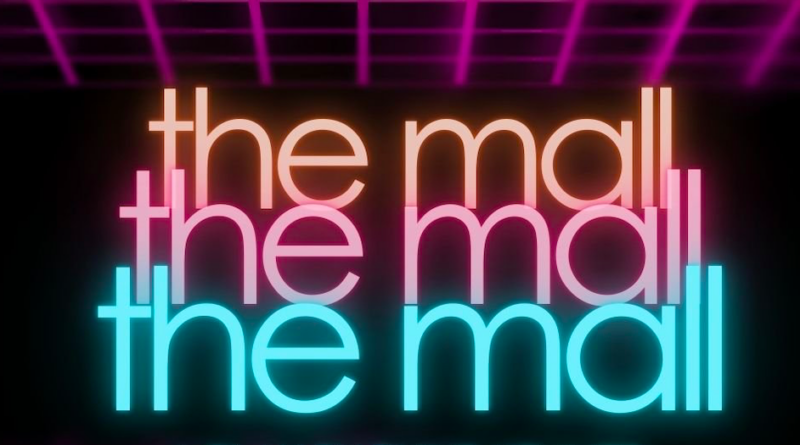
The Mall The Mall The Mall is the new play from Philip Kenner running at New York City’s The Tank through March 22. The show follows a group of teenagers who are stuck in their local mall facing an evil conspiracy, according to press notes. The only way to survive the ordeal — and save the mall — is to use their video game knowledge to find a means of escape.
The Mall The Mall The Mall is directed by James Wyrwicz and produced by Twin Fruit Productions. The show is billed as a nostalgic love letter to nerd culture, and it’s a personal letter from Kenner, who has fond memories of hanging out in malls and building up his identity with friends.
Recently Kenner exchanged emails with Hollywood Soapbox and opened up about his love of mall culture and how that culture is changing in 2026. Questions and answers have been slightly edited for style.
Were you a mallrat growing up? What was the experience like for you in your younger years?
I’m from New Rochelle, New York, and we have a movie theater/shopping center downtown called New Roc City replete with an Applebee’s, Gamestop, mini golf and IMAX theater. My friends and I would often buy a mishmash of appetizers from Applebee’s, scarf them down while loudly discussing whatever video game we were playing or musical we were rehearsing, and then we’d go see a movie. I remember taking my middle school girlfriend to see Twilight and feeling really nervous about kissing her. The fictional mall of the play is a combination of the stores and quirks of two other local malls, The Westchester Mall and The Galleria in White Plains. The Westchester is still standing, although it has become glitzier in the decade and a half since I was running around the stores holding a lemonade from the food court.
The mall was a contained space where we could practice being independent. It was an opportunity to mimic the behavior of the adults we were surrounded by: making our own decisions about what to eat and what to buy, even if we only had $20. I had a job videotaping B’nei Mitzvahs for my synagogue, and I remember how euphoric it felt to spend money I had earned myself on new jeans or a new Wii controller.
Maybe most importantly, time spent at the mall with your best friends was completely unstructured and away from the supervision of parents. There’s something elemental about being with your besties singing “Bad Romance” and taking pictures for your tumblrs and planning out which Pokémon you need to trade to evolve them. The mall was a place to rehearse being a consumer of culture with your own tastes and agency, but the mall is not without its sinister underbelly. The whole purpose of the space is to sell, sell, sell, and there are probably some gnarly side effects to practicing independence at a place so tied to capitalism and purchasing. Case in point: I’m about to turn 30, and I’ll still buy any Pokémon game that comes out and whatever console is required to play it. My sense of self is very tied to that product; those games can be both wonderful nourishment for my inner child and also a testament to how lucrative it can be for a brand to convince children and teens that their identities exist within a product.
If malls went away entirely, what do you think would be lost in the collective culture?
This question brings up a lot of juicy contradictions that we are teasing out in the play. In the last few years, much has been said about the cannibalization of third spaces and how there are fewer places for people (of any age, but especially teenagers) to hang out without an agenda or price of entry. Famously, the mall is all about spending money, but it’s also totally free to be there and chill. I’m not as concerned with the loss of malls specifically as I am with how our culture has rapidly digitized the entire experience of childhood. I would much rather my (imaginary) child cause a ruckus in the food court than get cyberbullied on Instagram or get called a slur on Fortnite. I want to avoid sounding like a Luddite, but I think there has to be a part of childhood that’s testing the limits of your world by being a little bit of a nuisance in physical space. Where better to do that than the Gap or at the free sample table outside a Panda Express? This kind of growing up can only happen in person, and malls are a great place to find that space.
On the other hand, malls are the snake pits of consumerism; every personality you could have is available for purchase, and every sign, light and smell is tempting you to spend like your sovereignty depends on it. It doesn’t take long inside of a Hollister or Victoria’s Secret to feel something truly evil at work. I don’t mourn any loss of corporate profit due to a mall closing, but I do lament a future where we are pushed further into the wormhole of individualism and out of our larger communities. Are malls the most ideal community space? No, but their steady decline is one of many coal-mine canaries warning us of a world where we are isolated from other people and siloed into algorithmic bubbles.
What can audience members expect at this unique show?
Despite the seriousness of my other answers, this play is a truly bananas adventure comedy. It’s Scooby-Doo meets tumblr scroll meets video game, and it oscillates wildly between satire and candor. I tried to write a play that reflected the feelings of being a teenager as you switch between total ironic detachment and complete, bloodthirsty engagement. The actors — Ellena Eshraghi, Mahayla Laurence, Trent M. Williams, Mikey Fiocco and Mia Wurgaft — are doing such specific and generous comedy work, and we spend most of our rehearsals making each other laugh. Our director, James Wyrwicz, has an expert eye for matching absurdity with precision, and the play feels like the most twisted Saturday morning cartoon. Our team has put together something unapologetically nerdy and fun, and it’s my sincere hope that audience members see the geekiest part of themselves in these characters.
Are any of the characters based on you and your friends?
Yes and no! Naomi and Viv, two of the three best friends in the play, are absolutely an homage to all of my best gal pals growing up. It’s a tale as old as time, and it was true for me: I was a little gay boy obsessed with powerful women, and I recognized that incredible feminine power in my friends. Many of my friends were also queer and exploring their gender, so we were just these stripe-wearing, crazy-hair-having, internet-culture-obsessed weirdos.
The third friend in the trio, Charlie, isn’t based on anyone I knew specifically, but he is my attempt at summarizing the experience of being a teenage boy on the outside of masculinity. I spent a lot of my time fearing the locker room and was averse to sports, but I was also discovering my own sexuality and felt very drawn towards big, hairy men. I had a hard time reconciling these feelings of being very into men while not always feeling like I was meeting the measure of what a man was. I still feel that way sometimes! It’s almost impossible as a playwright not to imbue characters with some of your own interiority, but that’s what makes playwriting a fun; you get to create an open secret between you and the audience.
Has the show changed a lot during its development?
I wrote the first draft of the play in graduate school at Northwestern in the winter of 2022 during my second playwriting class with Thomas Bradshaw. As a writer of iconically confronting plays, Thomas always kept an eye on places where I was pulling punches in my writing, and he challenged me to write a play that was unapologetically soaked in itself, hence the abundance of nerdy references.
The first production of The Mall The Mall The Mall went up in Chicago in 2023, directed by Eli Newell, and Eli was as much a dramaturg as he was a director. His insights about the play’s sharp turns and ominous diversions brought the play from a broad sketch of teenage silliness into a precise comedy with real teeth. My co-producer and fellow playwright, Michael Wilder Frazel, was also a big advocate for turning up the absurdity of the play, and without Michael and Eli as champions of the play, it wouldn’t exist in its current form.
The cast, creative and producing team for the 2026 NYC production is truly an all-star group of friends and collaborators I’ve been working with for the last 12 years, and it feels amazing to use this play as a vehicle for what my friends — new and old — can do. My producing teammates — Mahayla Laurence, Skye Pagon and Anna Bowman — are my literal avengers. We’ve only made the play more of a theatrical event, and it’s a privilege to get such a meaningful level of support from The Tank. This production is the perfect marriage of a team of bad-ass theater makers and an organization that champions theater artists. I’m a very happy playwright!
Are you amazed at how nerd culture, which used to keep us nerds on the fringe, has kind of gone mainstream in recent years?
We’re really having a moment, aren’t we?! Dimension 20 sold out Madison Square Garden with a live play Dungeons & Dragons event, and everyone and their mother is streaming video games on Twitch. Good! Nerd culture sets a powerful example for the world that engagement is meaningful; caring about something, even if it’s nerdy as hell, is the whole point of being alive.
To answer your question, I am a little amazed! I didn’t think that I’d ever feel so comfortable being in an interview talking about buying Pokémon games, but I’d much rather be here than in the nerd closet. I think there is also a somewhat inherent link between queerness and nerddom. Whether it’s being a gaymer or theater nerd or Arianator, queer people know what it means to be obsessed with something. We attached ourselves to identities beyond our bodies because it didn’t always feel good to be in our bodies. I think as queer people take up more rightful space in mainstream culture, our nerddom comes with us. …
By John Soltes / Publisher / John@HollywoodSoapbox.com
The Mall The Mall The Mall, written by Philip Kenner, continues through March 22 at The Tank in New York City. Click here for more information and tickets.