
INTERVIEW: The treadmills are back, this time in Astor Place
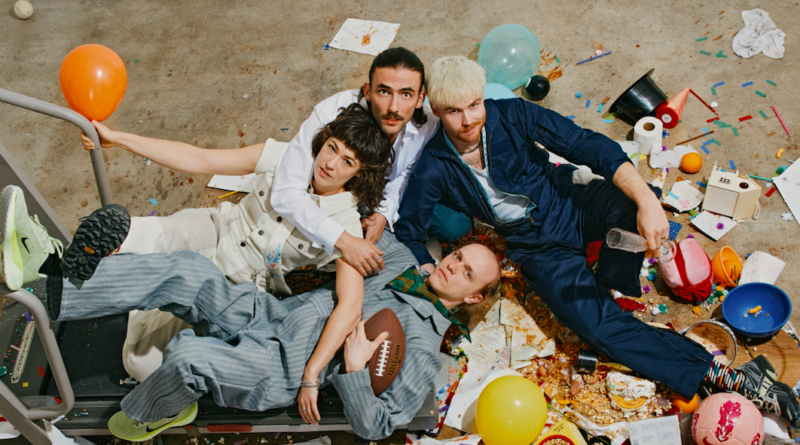
Photo: Burnout Paradise features the theatrical talents of Australian company Pony Cam. Photo courtesy of Emilio Madrid / Provided by Vivacity Media Group with permission.
Burnout Paradise, the theatrical extravaganza that has played around the world, first made inroads in New York City at St. Ann’s Warehouse, and now it’s back, this time at the legendary Astor Place Theatre in Downtown Manhattan. The show was created by Pony Cam, featuring the talents of Claire Bird, Ava Campbell, William Strom, Dominic Weintraub and Hugo Williams.
Here’s the premise: Over the course of 75 minutes, these five performers utilize a set of treadmills and try to accomplish various tasks, everything from cooking to filling out a grant application, according to press notes. Whether they make it or not hugely depends on the audience.
Think Blue Man Group meets Survivor, which is appropriate given that those blue men called the Astor Place home for decades.
“We’re redesigning the show over these two weeks on the way to previews,” Williams said in a recent joint interview with his cast mates. “It’s a little bit more cramped than we usually are accustomed to, which is great. It makes it feel like you’re really going into a cool, tight space, but that has limited space on stage, and to solve those problems, we put up some new elements in the space and designed the show in a more elaborate way. And we’ve added some new tasks and things like this, so we’re trying to figure out how to make the show over again. And that’s kind of exciting. It’s nice to be working on new things that we don’t know the results of yet, rather than having to try to rediscover the same old things that we’ve done over the shows we’ve already made. That’s what we’re all doing at the moment.”
Pony Cam originates in Australia, where Burnout Paradise began, and the phenomenon has since transferred to other theaters and even made it to the Edinburgh Fringe Festival. Here’s how Campbell describes the theatrical experience:
“Four performers running on treadmills, and each treadmill exists in its own world,” she said. “Those worlds represent different lives that we’ve decided as a collective … so you sort of see different worlds that you can resonate with. There might be your admin tasks or your leisure tasks that you do on the weekend, and you watch these performers frantically juggle those worlds and try to hold everything up. So you just see the performers giving their best, valiant efforts to manage these things. … A lot of audience members really resonate with that real struggle to hold all the worlds up, and I guess we can’t do the show without the audience members. If there were no audience members there, we would fail all the tasks, so it really is a rallying cry for our audience to come up and be in those worlds with us as we do everything. And so in that way, although there’s struggle and lots and lots of failure, everyone all comes together and sort of celebrates either winning or failing together.”
There’s the physical exertion that is needed to pull off each performance, but there’s also the mental stamina to last on the treadmills for an hour. Strom said the experience is rewarding, but often overwhelming.
“I’ve had a few shows where an audience member comes up,” Strom said. “And in that moment of connection with that person I realize how much I needed a moment of calm breaths, so it’s really lovely to have those moments of connection in the middle of the madness of the show. And then after the show it’s really lovely again to share some space with the audience in a less codified way and be able to just chat with them as people and in less of a performer-audience contract.”
Bird talked about the endorphins that the cast receives when they are on the treadmills and how that extra energy can help with their performances.
“There’s still a bit of trepidation stepping out on stage,” Bird said. “You’ve got five times adrenaline surging through your body in any given show, and I think that probably starting point lasts for maybe a month. And then those adrenaline endorphins stop functioning the way that they do when you first start out in your exercise regimen. You’re like, wow, running feels great, and then after a while, oh yeah, part of the routine. You’ve got to do it. So I think we’re interested in this really long run to see also what the endurance is and how our bodies kind of go with it all. It really is a big experiment, so it’s going to be kind of interesting.”
Williams shared that this off-Broadway transfer has been in the works for a few years, ever since the company moved into St. Ann’s Warehouse in Brooklyn. There were people who stopped by and started thinking about the long-term viability of the show.
“It was very easy to see that the show had this kind of massive wide appeal, not just for theater-makers or people that associate with that community of artists, but sort of punters who are looking for a really high-energy, but slightly shortened night out, rather than three hours, something that sits in this 75 minutes,” he said. “I think particularly in the context of America right now, where people are looking for ways they can cooperate and care with one another but feel very scared about it, about whether they’ll go too far or whether they’re not doing enough, this show is almost like a little playground. It gives you a very safe space to be caring and be joyful, and then the last thing we discovered at St. Ann’s was that the show really works with families. And kids would come multiple times. They would hang out.”
Weintraub said there’s a great honor moving the show to the Astor Place Theatre, which sits across the street from The Public Theater and is steps away from the campus of New York University. There’s a lot of creativity and energy in that section of the Big Apple.
“When we were looking at spaces around New York, we looked at a bunch of theaters, and all of them were fine,” Weintraub said. “And then we came into this one, which was still running Blue Man at the time. … There’s something that felt really right for our company. In the same way that Blue Man started, we are this collective, and we make work in a very collective-driven or, I hesitate to say, democratic kind of fashion. In a way it feels like if you give us the space for 30 years, we’ll end up exactly like how Blue Man left it. We just want to take it over and make it our own and kind of be a bit naughty.”
By John Soltes / Publisher / John@HollywoodSoapbox.com
Burnout Paradise begins previews Wednesday, Feb. 18, at the Astor Place Theatre in New York City. Click here for more information and tickets.