
INTERVIEW: ‘Mahabharata,’ an exploration of karma and dharma, arrives in NYC
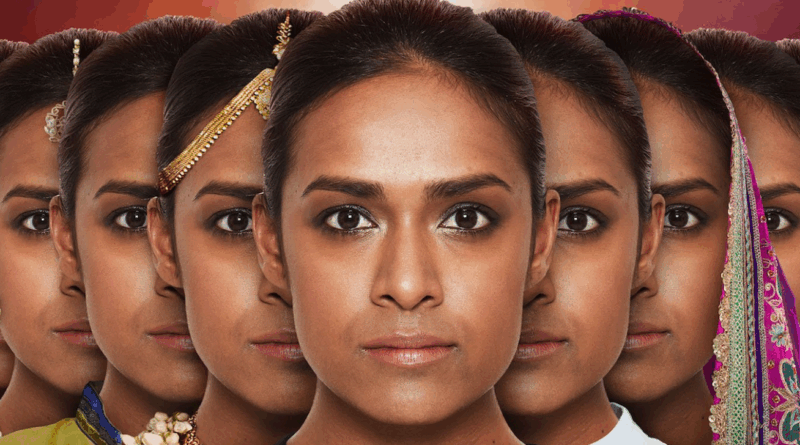
Photo: Mahabharata will be presented in two parts at Lincoln Center. Photo courtesy of Why Not Theatre / Provided by Michelle Tabnick PR with permission.
Mahabharata, the new theatrical spectacle that is broken into two parts, will begin a week-long engagement at the Rose Theater in New York City as part of Lincoln Center’s Summer for the City festival. Performances kick off Tuesday, June 24, and continue until Sunday, June 29. Part one is called Karma: The Life We Inherit, and part two is called Dharma: The Life We Choose.
These concepts of karma and dharma are central to understanding this classic story, which is more than 4,000 years old and foundational to Indian culture, according to press notes. Although the tale being told about a family feud is an ancient one, creator-directors Ravi Jain and Miriam Fernandes, of Canada’s Why Not Theatre, have crafted a narrative that is also contemporary and speaks to these changing times.
Recently Hollywood Soapbox exchanged emails with Sharada K. Eswar, creative associate of the production. Eswar is also the translator of the “Bhagavad Gita” opera in Dharma: The Life We Choose. Questions and answers have been slightly edited for style.
Why Mahabharata? Why now?
The answer is as compelling as it is straightforward: The main challenge in the modern world lies in upholding dharma or righteousness, justice, duty honour or truth. What the world today badly needs is dharma, the capacity to articulate it, the capacity to build it and the capacity to sustain it, and it is difficult to conceive of a more powerful vehicle than the Mahabharata — especially the “Bhagavad Gita” — that communicates this message to head and heart.
The Mahabharata is an extraordinary tale, and the wisdom it contains needs to be consciously and deliberately gleaned. It is rich in symbolism and metaphor. Above all it is faithful to the truth. It makes no attempt to mask; it does not rationalize the actions of its characters. It is a record of human beings with human weaknesses. Almost no person is portrayed as all good or all bad.
It is not that the Mahabharata has no extraordinary characters, but even while depicting the extraordinary person, the poet does not let us forget the ordinary in him. As the Romanian writer Mircea Eliade said: “We become really human when we have followed the learning of the myths, imitated the gods.” The Mahabharata teaches us that if we respect dharma, it will respect us; if we follow dharma, it will follow us; and if we adhere to dharma, dharma will adhere to us.
Has going deeper into this story and this text changed you and how you view the world?
Reading the Mahabharata is a journey of self-discovery, offering profound insights into the choices we make in life. Personally, I think the point is not about change. The point is about growth. To grow involves change. Animals change, too, so do plants. Changing because one’s survival depends on it because one is bored with the current situation is certainly not what I believe the epic talks about. The question is: Why do you want to change? It is a constant work in progress. Life is about growth, growth is about inclusion, inclusion demands emotional maturity.
Has the piece changed throughout its global tour?
Stories of Mahabharata are universal and eternally relevant as it deals with emotions. Technologically we may be different from people who lived a thousand or 10,000 years ago, but emotionally we still the same, petty and profound The story, whether told in Canada or Australia or the UK, remains the same; The gaze changes as the audience changes.
Would you say the piece is more traditional or contemporary?
I would say that the piece is timeless! Our Mahabharata offers a unique lens into universal human experiences and ethical dilemmas — 2,000-year-old dance forms like the Odissi and Kalaripayattu, and centuries-old Kathakali and opera blend seamlessly with today’s technology to bring this 4,000-year-old epic alive. It provides a digestible narrative of the epic, highlighting its relevance to contemporary issues like leadership, greed and the consequences of actions.
From the audience perspective, what do you hope is learned by experiencing this ancient tale?
Many modern scholars, writers and playwrights, exhausted and overwhelmed by the maze of stories of the final version of the epic, are convinced that the Mahabharata is only about the futility of war, which is not the real essence of the epic.
One of the interesting things I gleaned while doing research (and which helped me understand the epic better) was that the original epic was called Jaya. Then it was called Vijaya, then Bharata and finally Mahabharata. Jaya was about spiritual victory. Vijaya was about material victory. Bharata was the story of a clan, and Mahabharata included also the wisdom of the land called Bharat-varsha. Jaya means victory. Vijay also means victory. But there is a difference. In Vijay, there are winners and losers. In Jaya, there are no losers. No one is defeated, for one triumphs over oneself. If one strips out the excess fat, one realizes that the Mahabharata is not a preachy tale appealing for peace. It is a determined exploration of the root of conflict. It is a book yearning for peace, not war. True peace happens when no one is defeated. True peace happens when one conquers oneself.
By John Soltes / Publisher / John@HollywoodSoapbox.com
Mahabharata, parts one and two, will play June 24-29 at Lincoln Center’s Rose Theater as part of the Summer for the City festival. Click here for more information and tickets.








Radha Eswar’s analysis is a most revealing and refreshing account of the great epic I have seen. It truly speaks to the modern (yet ancient) man. One feels compelled to see the production after reading this review.