
INTERVIEW: ‘Folktales’ offers a Norwegian alternative to the high school experience
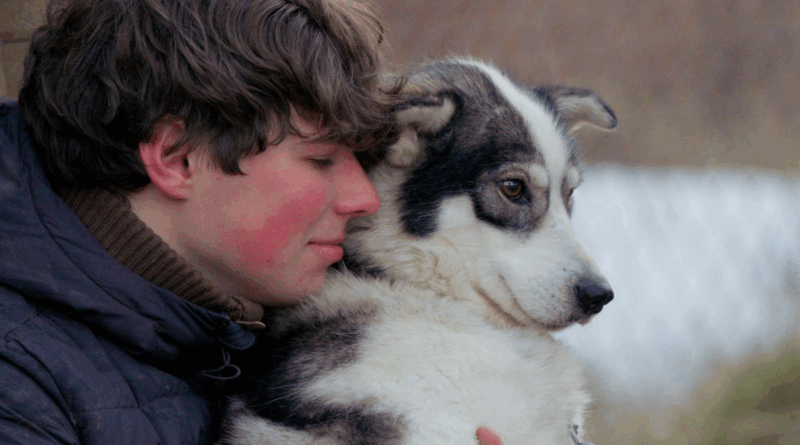
Photo: Folktales features the story of Romain and Mjød, among other who are enrolled at a folk high school in Norway. Photo courtesy of Tori Edvin Eliassen / Provided by Magnolia Pictures with permission.
The new documentary Folktales continues filmmakers Heidi Ewing and Rachel Grady’s fascination with modern coming-of-age tales. Their previous efforts include The Boys of Baraka and Jesus Camp, and their latest project takes them to the northern reaches of Norway to follow students at a so-called “folk high school.” These schools are structured respites for Norwegian teenagers who have the chance to grow closer to various folk traditions in their country, including everything from Viking life to dog sledding.
“I had never heard about folk high schools,” Ewing said in a recent Zoom interview. “I had never been to Norway, and I read the autobiography of an American dogsledder named Blair Braverman, who I heard on a podcast. … And the second chapter of her book, Welcome to the Goddamn Ice Cube, she said … she was in California, and she was dreaming of the Arctic for some reason. She went to a folk high school at 17 in the north, and she studied dog sledding. And it changed her life.”
Ewing instantly became interested in this idea of a folk high school and presented the idea to Grady. An exploration of this unique school system seemed to be in their wheelhouse because of their investigations of young people in other documentaries, so they decided to keep exploring.
“We looked into them,” the filmmaker said. “There are still 400 of them in Scandinavia. Every Scandinavian has heard of them. They wax and wane in popularity, but I just thought what an interesting concept to go some place for a year to build your character, to overcome fears and to try something you’ve literally never thought of before. So there are folk high schools for Viking life, LARPing [live-action role playing], circus life. You can go for anything, but in the northern part of Norway, they do Arctic survival. It’s a very challenging environment. I thought, who would go there? Why do they go there? What happens there? And it just spiraled into a great deal of research.”
The directors visited Norway and stopped in at eight folk high schools. Eventually they landed on Pasvik Folk High School. At first, they weren’t sure they could commit to this particular school because it is located so far north in Norway, making the logistics a real challenge, but they loved the location and knew the audience of their as-yet-unmade documentary would appreciate the chance to escape with them.
“For us, we like an audience to feel a sense of discovery,” Ewing said. “I hope that in the film there is a sense of wonder and discovery for the audience that the filmmakers are also experiencing. Having said that, we employed an entirely Norwegian crew and creative team, except our editor. So we were with Norwegians and field producers and stuff like that, and a co-producer in Norway, so they also helped us a great deal to make sure we got everything right.”
Ewing said she hopes audience members walk away from Folktales with a different understanding of what it means to grow up in today’s world. She referenced the ongoing mental health crisis that is impacting younger generations and the difficulty so many people have making friends. Folk high schools don’t provide all of the answers to these problems, but it generates conversation.
“I do think that Folktales works its way into that conversation because it is an alternative way for young people to learn how to connect,” she said. “They’re not forced off their phones, but as you notice in the film, they kind of stop using them. That was accurate. Real life can compete with their phones in certain circumstances, and that’s what we observed happening. It was way more interesting to go out and do a polar plunge with your friends and spend the night in the forest with dogs than to be scrolling on your phone. It naturally happened, so, yes, I do think the concept does offer an alternative to what we’re doing, at least the conventional schools we have here.”
Finding Pasvik was a challenge. Ewing said that she and Grady emailed so many schools, and the response was almost uniform: They thought they were being punked. Who could possibly want to document life at these tucked-away schools?
“We had to email several times,” Ewing said. “They’re like, ‘Oh, I didn’t think it was real because who would ever be interested in a folk high school.’ They all said that, so at first they didn’t believe us. Then we went to Pasvik, and we met with … the principal. And we’re like, ‘We just love these teachers.’ … We didn’t know who we were going to film yet, so it was challenging. But he said, ‘If you’d like to come and make a film here, well, you’re Americans, are you going to sue me if someone sprains an ankle here?’ I was like, ‘That’s a great question. That’s a funny question. That’s a smart question. No, in fact, we’re going to shake hands.'”
Ewing added: “Norwegians are really polite, on the stoic side, on the more reserved side, but very direct like New Yorkers, so it kind of worked out. We were all very transparent. He said, ‘The kids have to decide if they want to participate. You’re not allowed to contact any of them until they say you can contact them through me.’ So we had to really respect the rules and wait until a student said, ‘OK, you can call me.’ So we spent our summer Zooming with students, and we didn’t get to meet all of them until we got there. … It was a very, very slow burn. Filming Gen Z is … not for the faint of heart. They’re used to controlling their own image. They’re used to the selfie. They’re not used to someone else having editorial control. It was an ongoing, constant conversation and negotiation with the students for the entire time, but we did build trust. And you see in the film there’s a lot of intimacy, so it was very well earned.”
By John Soltes / Publisher / John@HollywoodSoapbox.com
Folktales, directed by Heidi Ewing and Rachel Grady, is now playing in movie theaters, including at New York City’s IFC Center. Click here for more information.