INTERVIEW: Aron Wiesenfeld compiles his Post-it drawings into new book
Image courtesy of the artist / Provided by Superfan Promotions with permission.
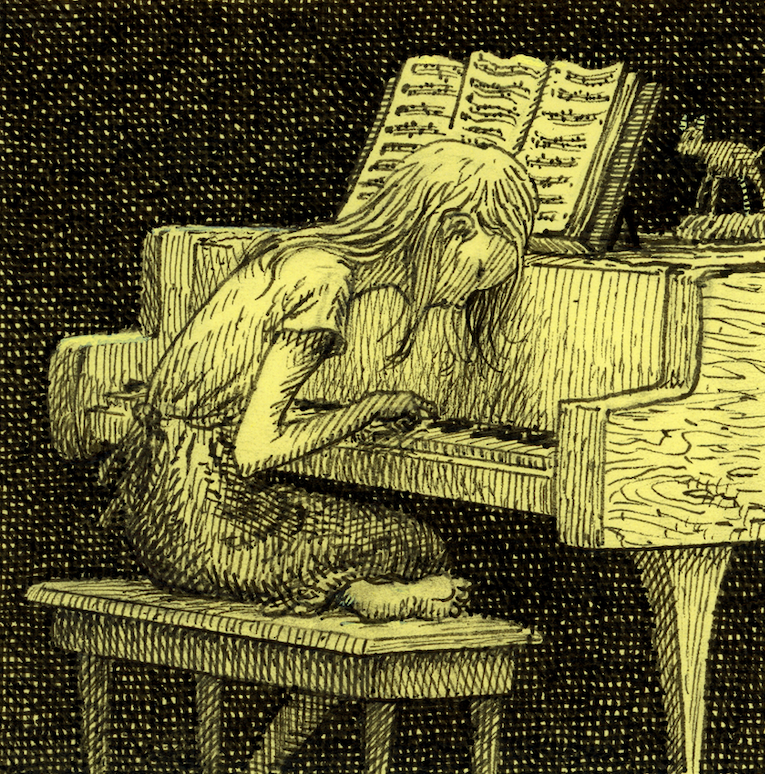
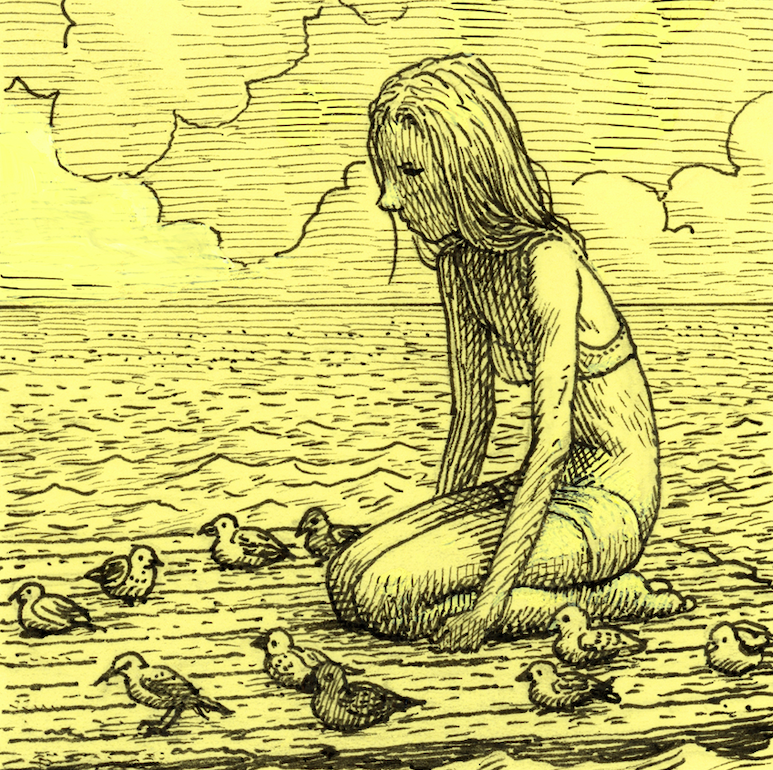
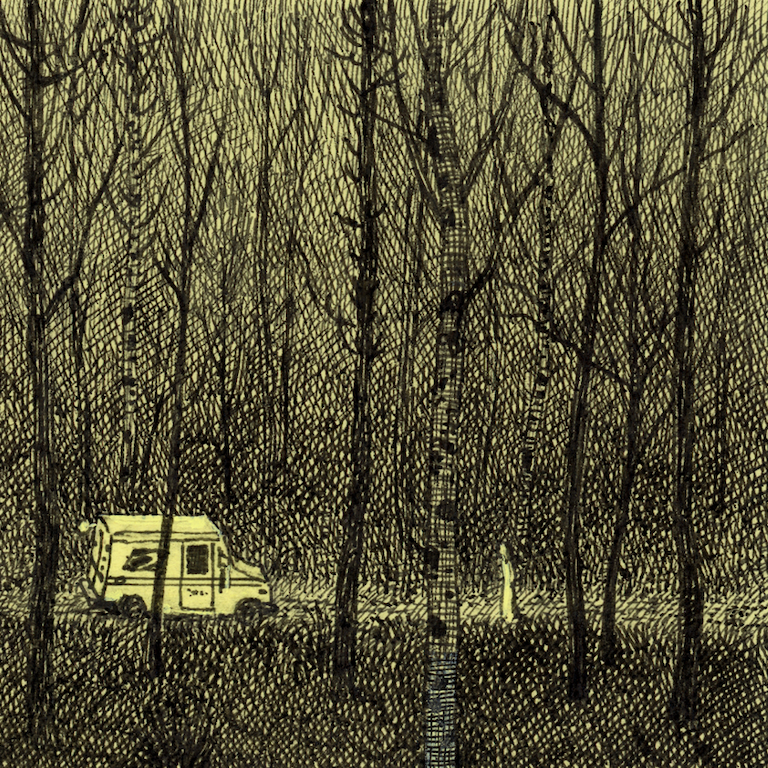
Aron Wiesenfeld has gone minimal for his latest project. Recently the renowned artist decided to focus his attention on drawings on Post-it notes, and he has now combined the work into a new book called Playtime: The Post-it Note Drawings, which is raising funds on Kickstarter for the next three weeks.
Wiesenfeld has dabbled in several different fields of the art world, such as fine art and comics, including Marvel’s Deathblow/Wolverine, according to press notes. But his new project has shrunk his canvas to only a few inches, which may seem, on its surface, to be limiting, but there’s something special within his drawings that feels freeing and expansive.
Recently Hollywood Soapbox exchanged emails with Wiesenfeld to learn more about Playtime: The Post-it Note Drawings. For this project, the artist only used a black pen, but he still wanted to capture the same mood and atmosphere — often of a melancholic nature — that are evident in his larger canvases. Questions and answers have been slightly edited for style.
When did you start creating art on Post-it notes?
An artist friend who collects art on Post-it notes asked me to do one for him. He got me hooked.
Are the Post-it works based on real people?
Many times they are based on strangers I observed, but some are more autobiographical, especially from memories of childhood — for example, how I felt riding my bike through empty lots in the evenings, dressing up for Halloween and playing vinyl records.
Besides the obvious, what is difficult about the Post-it as a medium? Are there also positives?
I find it helps me focus on only what’s really important. I want the images to communicate certain things very quickly, such as character, story, mood, etc., and so I have to delete anything that interferes with that. I suppose the same is true of big paintings, too, but you can get away with a lot of extraneous stuff in a painting. I think of it like the difference between writing a novel and writing a Haiku poem.
Why use Kickstarter for this project?
For this book, I wanted to work directly with the printer because I have never done that before. I wanted to be able to design every aspect of the book, including all the materials used. In this instance, crowdsourcing allows me to do that more than working with a publisher.
Do you feel that this series is complete? Will you ever go back to Post-it notes?
It’s not complete. For one thing, I have a lot of ideas for paintings that never get made because painting is so time-consuming. The Post-its are a way to take those ideas — the ones that would ordinarily not be pursued — and make them into some kind of finished work. Ironically many of those “less good” ideas turn out to be more interesting in the end than the ideas I was initially more excited about, but they needed to be explored further to find that out.
Do you agree with the critics who say that there’s a melancholy in your works?
I think so. I’ve always been attracted to “sad” art and music because I thought it was beautiful.
Why call the book Playtime?
Firstly because the drawings did feel like play to me. As I mentioned, the bar is lower for these drawings than in my more involved work, and since there wasn’t very much at stake, it became a lot of fun. It reminds me of an anecdote from a book called Art and Fear: A teacher in a ceramics class divided the class in half. One half of the students were assigned to make a single piece during the semester, and that would be their grade. The other half of the class was to make as many pieces as they possibly could, and they would be graded only on the quantity. At the end of the semester, all of the best pieces had been created by the quantity students. I think the lesson is that when you are cranking out the artwork and not thinking too hard about it, that’s when your unconscious comes out to play.
The title also refers more literally to the subjects of the drawings, who are often involved in leisure activities such as sports, listening to music and wearing costumes.
By John Soltes / Publisher / John@HollywoodSoapbox.com
Playtime: The Post-it Note Drawings by Aron Wiesenfeld is now raising funds via Kickstarter. Click here for more information.