
INTERVIEW: After successful Edinburgh run, ‘Lost in Del Valle’ premieres in NYC
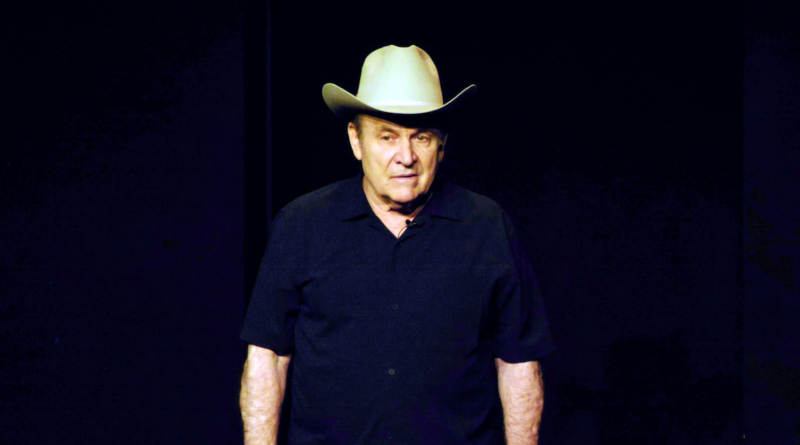
Photo: Ned Van Zandt wrote and stars in Lost in Del Valle, now running at the SoHo Playhouse. Photo courtesy of the artist / Provided by DARR Publicity with permission.
Lost in Del Valle, the new solo show from Ned Van Zandt, tells the remarkable story of the performer’s time spent in the infamous Chelsea Hotel in the 1970s. This is a tale, as promised in the advertising, that’s filled with sex, drugs and rock ‘n’ roll, but the narrative also expands beyond New York City and includes Van Zandt’s time in Texas, Los Angeles and all points in between.
Performances of Lost in Del Valle, which was developed at The Orchard Project and previously played the Edinburgh Fringe, continue through May 3 at the SoHo Playhouse’s Huron Room. Amir Arison directs.
Recently Hollywood Soapbox exchanged emails with Van Zandt to learn more about his fascinating life and how he came to know Chaka Khan, Sid Vicious and Nancy Spungen, among others. He opens up about his sobriety and his time playing Rudy Giuliani in the Netflix show Painkiller. Questions and answers have been slightly edited for style.
How did you find yourself at the Chelsea Hotel? What circumstances in life led you there?
In the spring of 1978, I was a young actor living in Los Angeles, starting to find success. I was also in a turbulent relationship with a beautiful Bulgarian fashion model. We were sharing an apartment in Silver Lake with a musician roommate who was dating Chaka Khan at the time. Life was big and messy. After playing a role in Hal Ashby’s Coming Home, my agent suggested I spend that summer in San Francisco performing Commedia dell’arte at the Renaissance faire in Marin County. The idea was I’d work on my skillset, meet some Hollywood people and have a good time. An East Coast equivalent might be the Williamstown Theatre Festival aka “star camp” where agents send their young up-and-coming clients to work on their chops.
It turned out to be a magical summer. As the summer was coming to an end, I got a call from the Los Angeles Police Department: There had been a double homicide in my L.A. apartment — a dope deal gone wrong. My girlfriend, roommate and Chaka Khan were all safe, but I dreaded returning to that apartment. The next night, while waiting in line for a movie in San Francisco, I met a group of kids, one of whom was musician Alejandro Escovedo, who became a lifelong friend. Hanging out after the movie, they told me they were all moving to the Chelsea Hotel in New York the following week and that I should come along. So I did. I sold my car, abandoned my L.A. apartment and moved into the Chelsea Hotel in late August — the same week as Sid and Nancy.
Was the Chelsea a place of sex, drugs and rock ‘n’ roll as the title of your play alludes to?
For me, it was like Disneyland for sex, drugs and rock ‘n’ roll. It was very specific to the time, New York in the
mid-to-late ’70s. The city was in a failing state and at its dirty best. It could only have happened there and then. I loved it until I didn’t. It got dark.
Are you generally an open person who likes sharing details of your personal life, or are you outside your comfort zone?
Both. In 1996, I was asked to write something for Thyrezine, which was a magazine or zine curated by the wonderful writer Sarah Thyre. I wrote a short story about Sid and Nancy in Room 100. During that process, I met writer Joey Soloway (Transparent, Six Feet Under) who also contributed a piece for the magazine. Joey liked my story and encouraged me to “write the stories you’re afraid to tell.”
Lost in Del Valle is very much the result of that advice. Last July, my brilliant director, Amir Arison, and I were at The Orchard Project’s Summer Arts Festival in Saratoga Springs, New York, rehearsing Lost in Del Valle for Edinburgh. Joey was there, too, workshopping a new piece and came to see our public performance. Almost 30 years later, I was able to thank Joey for that great advice. As a writer, I’m more comfortable sharing personal details. There’s a buffer. As a performer, it’s riskier, it’s immediate and can be scary — definitely outside my comfort zone. But I hop on the roller coaster and go for it.
How did the run in Edinburgh go? Has the show changed since then?
Edinburgh was amazing and challenging. In Edinburgh, you’re not only performing, but then you’re out on the street handing out postcards and flyers, hawking your own show and trying to catch other shows in between. But it was fantastic. We won awards, had great audiences. I made some new friends, reconnected with my old pal Miriam Margolyes and saw some great theatre. It was magic, and what a beautiful city.
As for changes, there were some discoveries made in Scotland, and some writing has been added. Edinburgh was the first time we added the musical component. In Scotland, we had the pleasure of working with a wonderful young guitarist named Sam Vincent Kilbride. Here in New York, we’re working with musician Mike Moore, who is terrific! For the most part, the show is essentially the same. If it ain’t broke, don’t fix it.
How have you found redemption in life?
I’m 19 years sober. Redemption is a tricky word. For me, it’s not religious. It has to do with living honestly, making amends and helping other people. Acting can be a very self-involved profession. I’ve found balance in the work I do in the recovery field. I’m a partner in a recovery house for men with substance use disorders and mental health issues (Transcend.NYC). We do good work. I try to be of service.
In 2023, I was cast as Rudy Giuliani in the Netflix miniseries Painkiller about the OxyContin crisis and the Sackler family. It became a project very dear to my heart, given my own history and my recovery, and I really wanted to work with Peter Berg. Because we were filming in Canada, the producers needed to know if I had anything in my past that could be a problem (the Canadian government is famously strict on allowing people with criminal records into the country). I told them that I did have a drug conviction, and I was writing a play about it. The producer paused and told me he’d call me back, and 10 minutes later I got a call from a lawyer who told me I had two weeks to get clearances from every city and state I’d ever lived in, every courthouse, every police department — London, Honolulu, San Francisco, Los Angeles, New York, Austin, Dallas. And I needed an FBI clearance, even needed one from Scotland Yard. I also needed character references. I went to work. I got them all. This mattered. On the day before the deadline, I received an express letter from the government of Canada. It read: “Given that you only had one conviction, that is not considered serious criminality and because of the passage of more than ten years since the completion of sentence, you are deemed rehabilitated. Welcome to Canada.” That was some sweet redemption.
What does Texas mean to you?
Love/hate. I’m a fifth-generation Texan. My great-great-grandfather was the secretary of state of the Republic of Texas pre-statehood. My great-grandfather was one of the founders of the city of Fort Worth. My grandfather died before I was born but was a banker at his dad’s bank. My father was a banker, an oilman and a novelist who wrote a 1967 bestseller, The Iron Orchard, about the Texas oil boom of the 1930s. It was made into a film in 2018. My dad eschewed being a Van Zandt and all its baggage, likewise my cousin Townes. Both died too young and alcoholics. My formative years, ages 5-10, were spent living in Venezuela, London, Rome and Somalia when my dad worked for Gulf Oil. I saw the world and experienced other cultures. When we returned to Texas, I saw racism and small-mindedness. I knew I wanted out. I begged my dad to send me to boarding school, and at age 14 I left. I’d found a progressive boarding school in Lenox, Massachusetts, where I excelled and became an actor. I love my dad for letting me go. That being said, there’s something about Texas I am drawn to: its can-do expansiveness of spirit, its physical beauty and some great people. I’ve lived in Austin as an adult, and even with its outrageous growth, it’s still a cool town. Will I ever move back? Unlikely. But in a weird way, Texas is home.
By John Soltes / Publisher / John@HollywoodSoapbox.com
Lost in Del Valle, written by and starring Ned Van Zandt, continues through May 3 at the SoHo Playhouse’s Huron Room. Click here for more information and tickets.